If industrial machinery downtime is to be minimised, safety ensured, and legal compliance maintained, it will be important for electrical faults in such equipment to be accurately diagnosed.
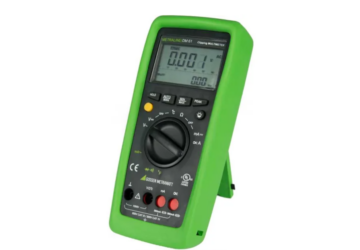
The right multimeter and other diagnostic electrical instruments can certainly help technicians with the quick and safe identification of problems, before such issues have a chance to deteriorate into much more serious and costly failures.
However, with electrical faults varying so widely, it is also critical for engineers and maintenance teams to know the “how” of a correct diagnosis process. Any misdiagnosis, after all, may lead to the wrong component being replaced and the underlying problem not being resolved (or even getting worse).
Common Electrical Faults and How to Spot Them
Some electrical faults are relatively straightforward issues, such as blown fuses or loose connections. Others, though, are more complex problems involving motors, control circuits, insulation, or power supplies.
With all that in mind, here are some of the faults that occur most frequently across industrial sites like factories, process plants, warehouses, and manufacturing premises, together with guidance on how they can be identified.
- Open Circuits and Broken Connections
The typical symptoms of these issues include equipment failing to start, intermittent operation, or complete loss of power to a circuit or motor. Classic causes include loose terminals, corroded contacts, cable damage, or failed internal windings.
Technicians can diagnose open-circuit and broken-connection faults by using a multimeter in continuity or resistance mode (with the circuit isolated and locked off) to check continuity through cables, contactors, fuses, and windings.
High or infinite resistance indicates an open path.
- Short Circuits
Blown fuses, tripping circuit breakers, burning smells, scorched insulation, or sudden shutdowns may give maintenance staff their first clear indication of a short-circuit issue in a particular device or installation.
Such professionals can diagnose the problem by isolating and then measuring resistance between phase conductors and between phases and earth.
If very low resistance is evident, this points to a short. For insulation-related faults, an insulation resistance tester (or “megger”) is generally more appropriate than a standard multimeter. This is because it applies a higher DC test voltage and can reveal insulation deterioration that ordinary resistance measurements may not identify.
- Earth Faults or Insulation Breakdown
Where engineers notice residual current devices (RCDs) or earth-leakage protection tripping, tingling on metalwork, or unexplained trips under load, these can be signs to investigate for earth faults or insulation deterioration.
This diagnosis process can be done by performing insulation resistance tests between live conductors and earth, using a suitable tester at the correct test voltage (typically 500 V or 1000 V DC in the case of low-voltage systems).
If the values recorded fall short of the manufacturer’s or BS recommendations, this points to the insulation having become degraded. Technicians should check, too, for moisture ingress, damaged cable sheaths, or terminal-box contamination.
- Overloads And Phase Imbalance
If motors run hot, performance seems compromised, or frequent thermal overload trips or unusual noise or vibration are observed, maintenance personnel should be mindful of the potential for overloads and phase imbalance.
To diagnose the problem, technicians should use a clamp meter to measure current on each phase under normal load. Significant imbalance (often more than 10%) or currents exceeding the rated full-load current are classic signs of mechanical overload, single-phasing, or supply problems.
Voltage measurements across phases can help confirm supply quality.
- Motor And Drive-Specific Faults
This category encompasses the likes of winding faults, bearing-related electrical issues, failed capacitors (on single-phase motors), or problems in variable-speed drives (VSDs). Among the typical symptoms of these faults are excessive noise and heat, torque loss, or nuisance tripping.
A sensible diagnosis process for such problems will combine resistance/continuity checks on windings, insulation testing, and (where appropriate) vibration analysis or thermal imaging.
With appropriate precautions and by competent personnel, live diagnostic measurements may be required on VSDs, including checks of DC bus voltage, output characteristics, and parameter settings. Suitable motor-drive analysers or oscilloscopes may be required to assess output waveforms.
Conclusion: Diagnosis Is a Vital Part of Maintenance for Industrial Equipment
Engineers and maintenance teams making regular use of diagnostic electrical instruments, combined with a systematic testing approach and sound maintenance practices, will go a long way to keeping industrial equipment reliable.
This, in turn, will support the cultivation of a more efficient, productive, and safer working environment. Ultimately, the early detection of emerging issues (and moving proactively to fix them) will almost always cost far less than purely “reactive” emergency repairs or damaging halts to company operations.